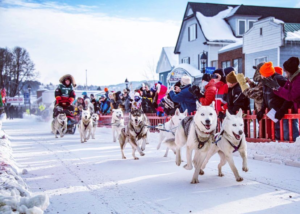
When my 17-year-old son Caleb started down the chute of the Can-Am Crown International Sled Dog Race yesterday morning, I could never have imagined that his race would end with his mother and me on our faces at Can-Am Crown Central, pleading with God for our son’s life.
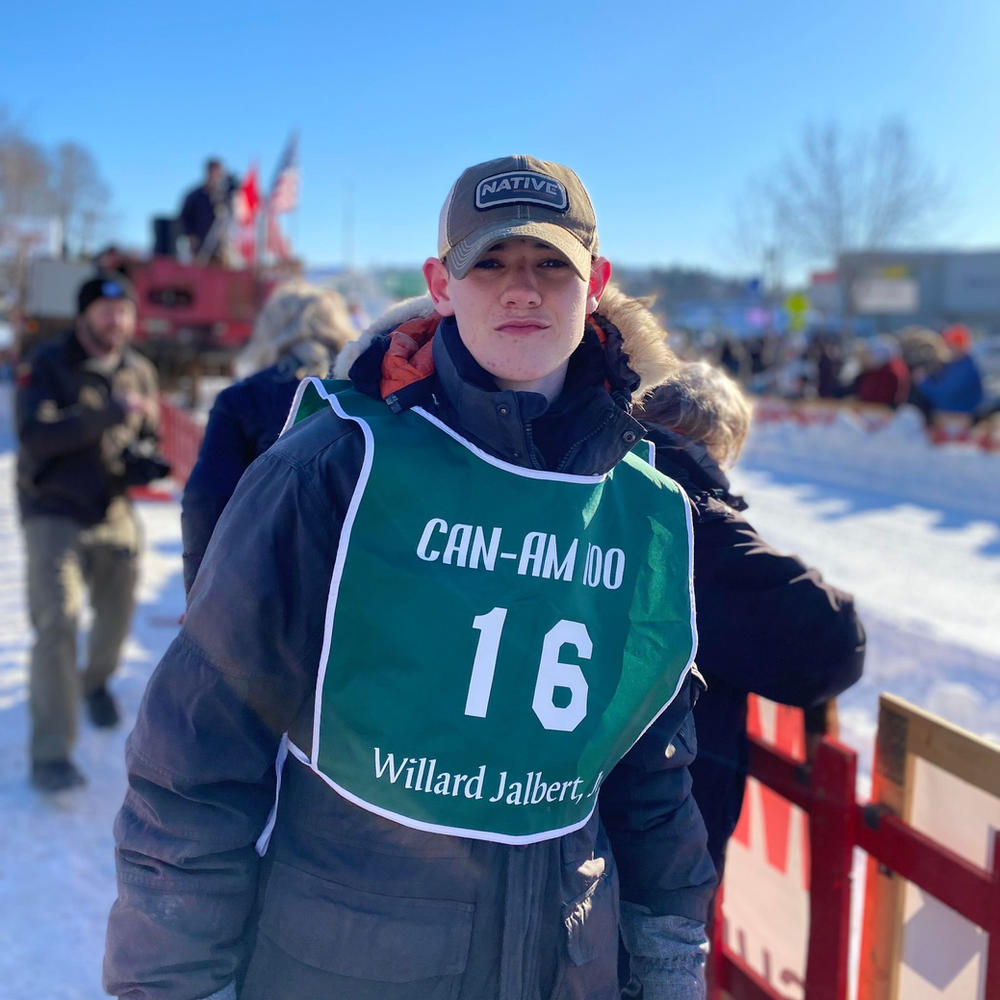
Caleb is a tenacious and rugged boy — one who hates the word “quit.” Our team is the strongest it has ever been. We are not sprint fast, but we are settling into a respectable distance groove that we hope will carry us into longer races in the future.
Caleb was proud to be mushing our team into its first 100-mile race, following our 281-mile dog sled expedition last year.
As the team coach and musher dad, I knew the trail conditions and knew how our dogs would respond in those temperatures.
“We will take 6 hours to get to Allagash. We will be there 6 hours. We will be 6.5 hours on the return trip.” I had been saying that for a couple of days leading up to the race.
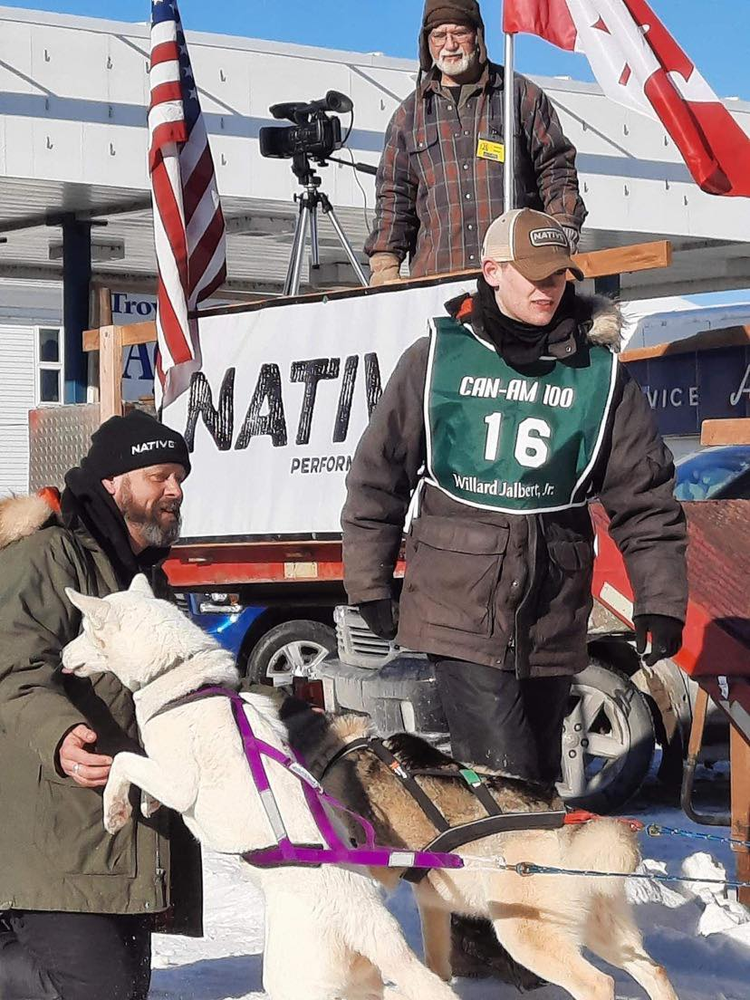
Our team pulled into the Allagash checkpoint right on cue. The dogs were stepping high and Caleb was in good spirits.
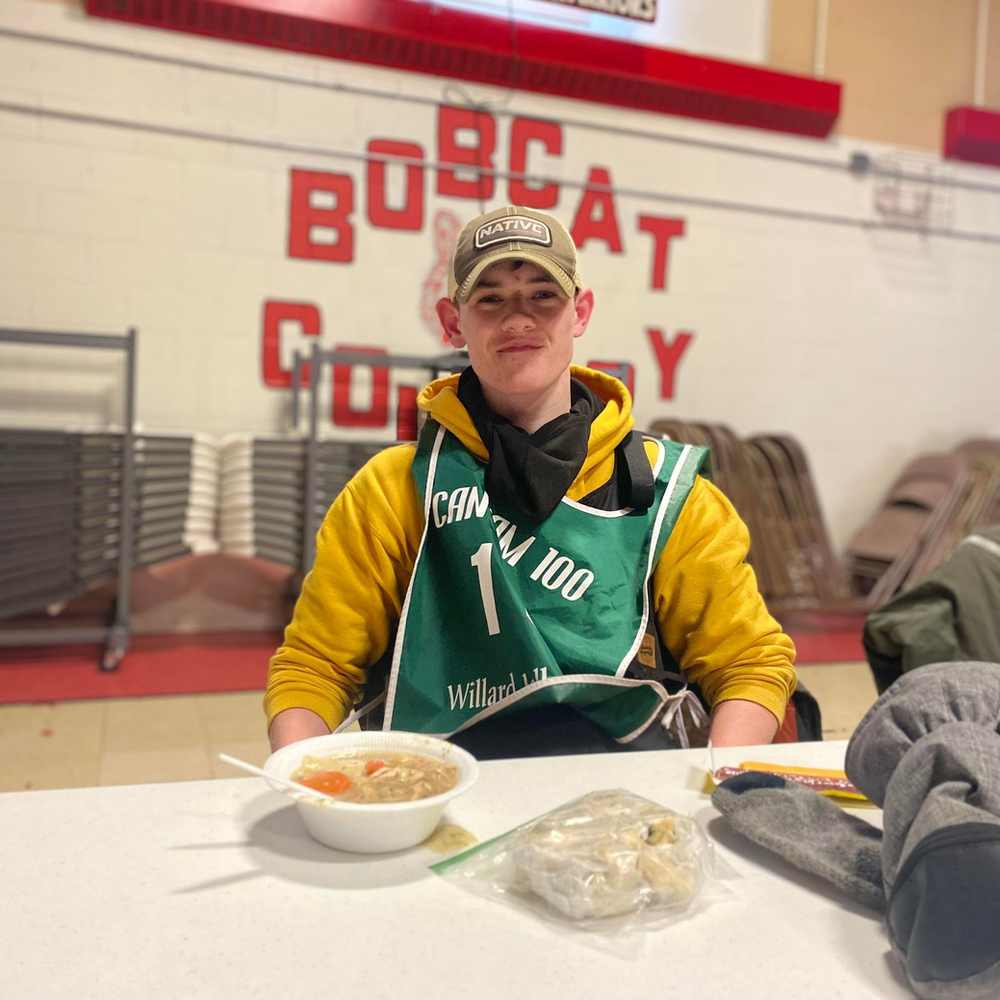
After dinner with our Allagash friends George and Cheril Turner, we headed straight to Can-Am Central to keep up to date on Caleb’s progress toward the finish.
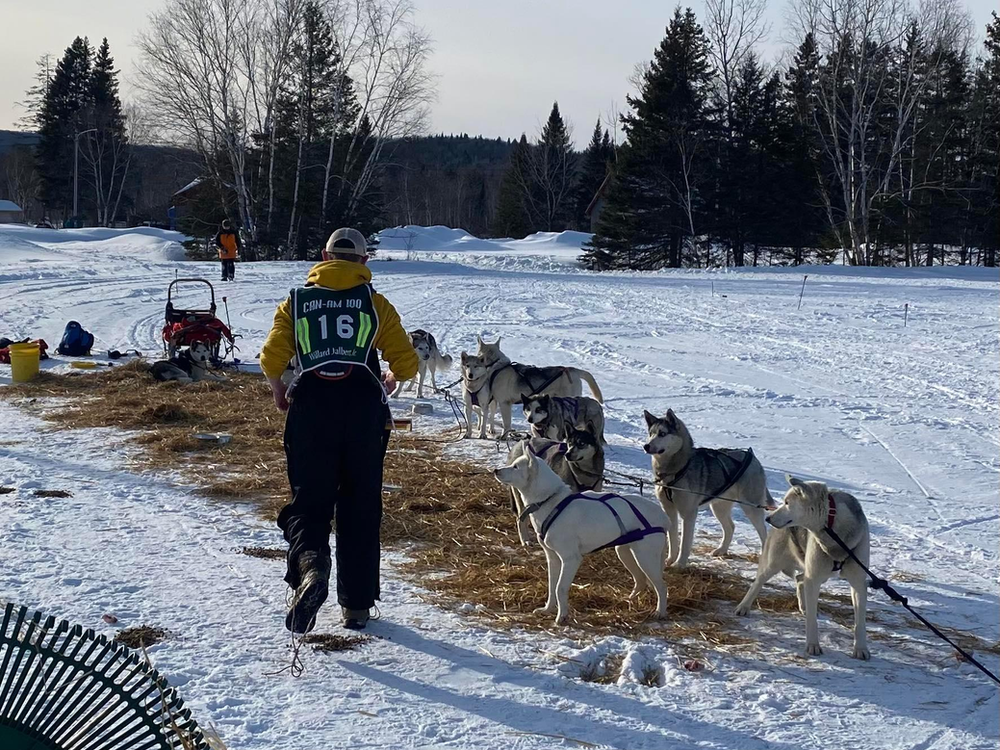
When we got there, I expected to hear updates from safety stations 8 and 9 about his progress. There were none. Maybe one checkpoint had failed to report him passing? Or maybe he was running a bit behind? So I took a nap.
When I woke, Caleb had been on the trail for nearly 6 hours. He still had not reached safety station 8, which is approximately halfway back from Allagash. I immediately went to the race officials.
“Something is wrong. I know this team and something is wrong. Maybe he turned onto the 250-mile trail?”
But there was a more personal fear pressing on me: “Or maybe it’s another moose?”
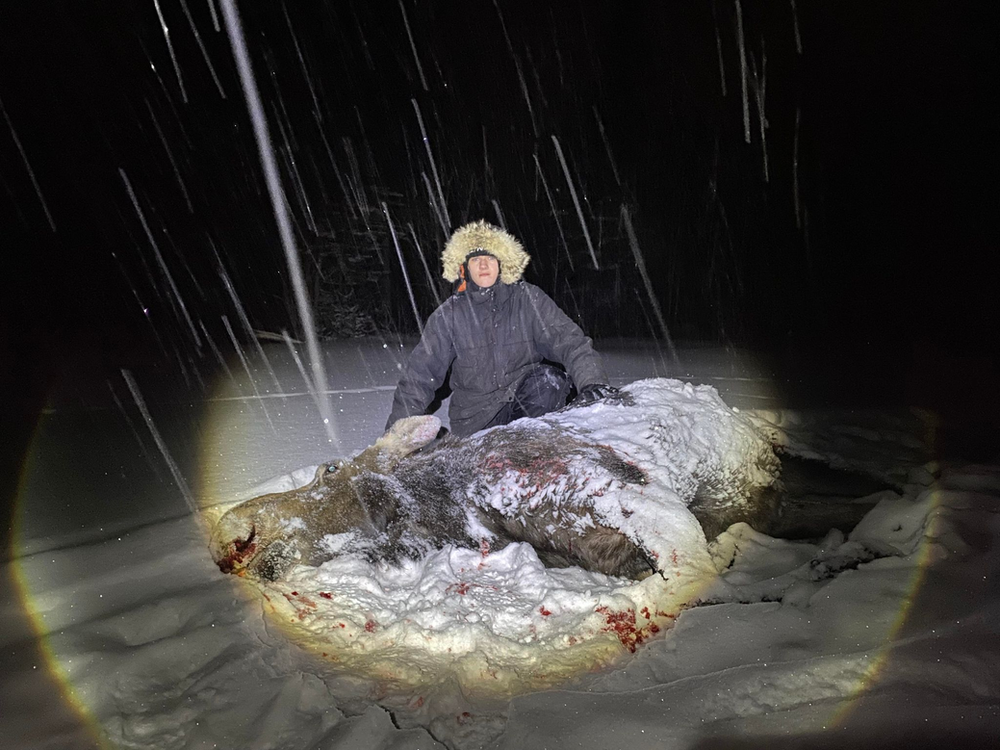
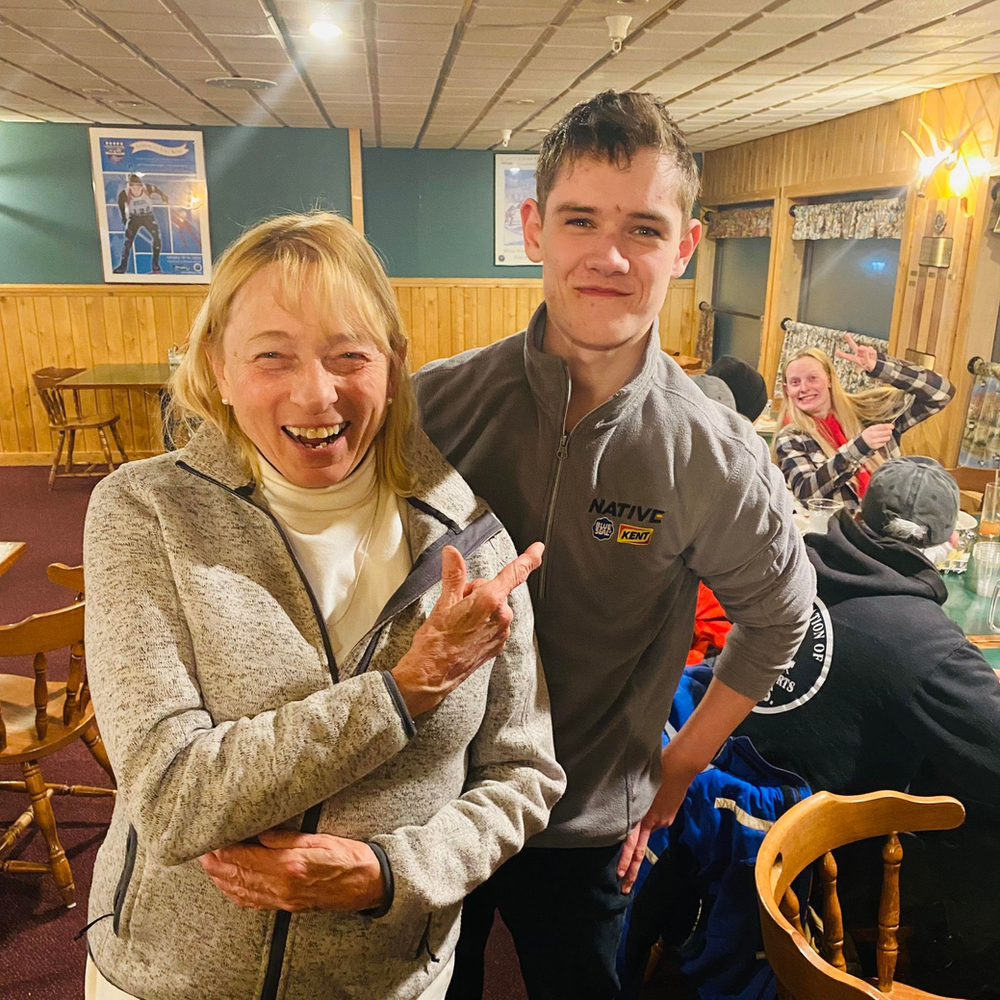
Caleb and his team had been attacked by a moose just three days prior. The 45-minute standoff with the rampaging moose had not ended until Caleb shot it. The story had already gone viral. Field & Stream Magazine had interviewed him. The Governor had posted a photo of herself with Caleb “the hero” on her social media the night before.
So I continued: “I asked race officials in Allagash if Caleb could carry a firearm and they denied the request. If this is another moose attack and he had no firearm, I won’t be happy.”
On my word, they sent out two snowmobiles to search for him. Another half hour passed, and I began to hear chatter from the radio room about medics being needed. Then a race official came out of Can-Am Central.
“Jonathan, you need to come with me. There is a problem.”
We went into headquarters just in time to hear the worst words I could ever have imagined come across the airwaves.
“Musher 16 has been located. Found lying in trail. Unresponsive.” Medical evacuation was requested. “We need trailers brought out to collect the dogs.”
I ask any parent reading this to tell me how those words would have registered with you. His mother turned to me with eyes of anger that seemed to say, “He mushes because of you. He is gone and it is your fault.” Or maybe she was saying, “Don’t just stand there — fix this!” Whichever it was, she emphasized the message with a backhand to my chest, then collapsed into her husband’s arms, crying.
I managed to hold it together for only a few minutes longer than she did.
“I need to know how he is.”
“Cold and unresponsive. That is all we know.”
In a flash of emotion I knocked some phone chargers off the counter.
“This is my son!” I yelled. “That is not good enough. Is he dead or alive?”
“We don’t know.”
At those words I too collapsed and began to weep and plead with God for my son.
For nearly half an hour — until they could get medical staff to him — this is all we heard over the radio: “Found lying in the trail. Cold and unresponsive.”
Every time we heard it, our panic grew.
The president of the Can-Am, Dennis Cyr, came in just before our update. His calm confidence steadied us and braced us for a possible confirmation of our worst fears.
All the while, Tammie kept assuring me, “It’s going to be okay.” When I had woken her to tell her that search parties were out for Caleb, she told me she’d had a dream that he was sitting frustrated in the woods. So when the dark news reached us, she kept saying that she felt in her spirit that he wasn’t gone — because she had seen him in her dream, awake but frustrated.
Then it came. “Musher 16 is conscious but disoriented.”
At those words our prayers of pleading turned to prayers of thanksgiving.
Dennis, Larry, and Jason — all veteran mushers — had reasoned with me to keep an open mind and not assume the worst.
*Sure*, I thought. *I can do that now.*
But “Found lying on the trail. Cold and unresponsive.” When that is all you know for nearly half an hour — what is a parent to think?
They were evacuating Caleb and his team to the nearest road, where an ambulance would meet him. They did not want us there. That was not comforting. But it didn’t matter. He was alive. No news seemed bad after that.
Finally the word came. He was en route to the hospital by ambulance, and our handlers were free to collect the dogs.
Well, I was the handler — and the father.
Thankfully, fellow musher and friend Tara Crossman and her mother had stayed to see Caleb come in. Caleb’s youth pastor, Mylon Beiler, was also there. They graciously offered to retrieve our dogs in our truck and bring them to the hospital.
We still knew nothing of his condition except “found cold and unresponsive,” and then “conscious but disoriented.” But conscious means alive. We were anxious but assured. Caleb is a fighter.
So what had happened?
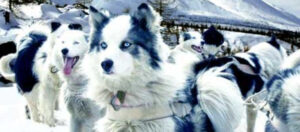
Our team was in better condition than ever before. We had borrowed two Seppala wheel dogs from our good friends and sister kennel in Ontario — Rejenn Kennels — to fill out our ten-dog team. The recent retirement of our two most trusted but slower leaders, Frost and Bear, had not only created a leadership crisis in our race team but opened up two spots. We are grateful to Ralph and Jenny for the loan.
When Caleb pulled into the 50-mile checkpoint in Allagash, he said he felt his return speed would only improve in the colder temperatures if he dropped Aklack, one of the borrowed dogs. The other — Journey — he said was performing superbly.
We also had another small issue. Two of our females were in heat. One, Kyra, was in a full-blown five-alarm heat. For the entire three-hour layover, our males were so obsessed with her that none of them rested. A veteran distance racer would not have hesitated to drop her from the team. But she had not caused significant problems on the trail thus far, so I did not counsel Caleb to pull her. That was on me — not on my rookie checkpoint musher. He could have dropped her and still raced with eight focused dogs, and likely still finished in our predicted time. I should have told him to drop her. I didn’t.
What I later discovered was that our main leader, Druid, had become obsessed with mating Kyra. No matter where Caleb positioned him in the team, Druid made his way back to her. And he wasn’t alone — Shiro, Olaf, and even Hatchet, her own son, were trying to tie with her at every opportunity.
When Caleb passed safety station 7 miles out, they reported he was “working it like a puzzle,” trying every combination to get the team moving again. In retrospect there were a few options — move Kyra to a male you don’t mind her breeding with and let them breed, or put her in the bag for the remaining 40 miles. It’s easy to Monday-morning quarterback it. But he tried every combination of dogs. Nothing worked, except leading the team himself, which he did for several miles. But humans can’t run like dogs, and eventually he was soaked in sweat.
We have since wondered whether this was also a factor: it was the first night run since the moose attack. Running the dogs during the day may not have fully revealed how well they had recovered from the trauma.
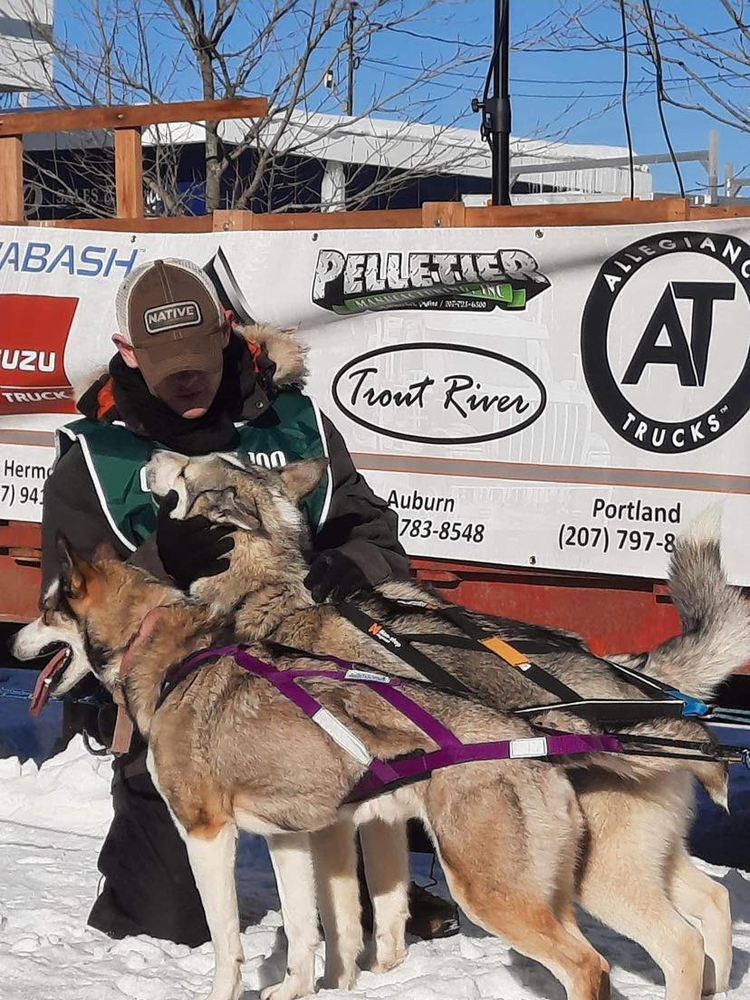
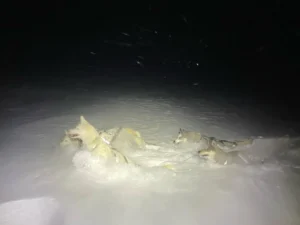
*”I remember thinking, Dad would tell me ‘It’s okay to rest, Caleb.’ I knew then my race was over. So I curled up with the dogs to wait for the trail sweeper and fell asleep.”*
He slept for an estimated three hours before searchers found him lying in the trail, unresponsive and cold.
The few minutes between when the ambulance pulled into the hospital and when they called Tammie and me back seemed like an eternity.
“In this room,” the nurse directed, pointing toward a room with a drawn curtain.
We walked in. The bed was empty.
“He isn’t in here?” I asked.
“He is using the bathroom,” the nurse replied.
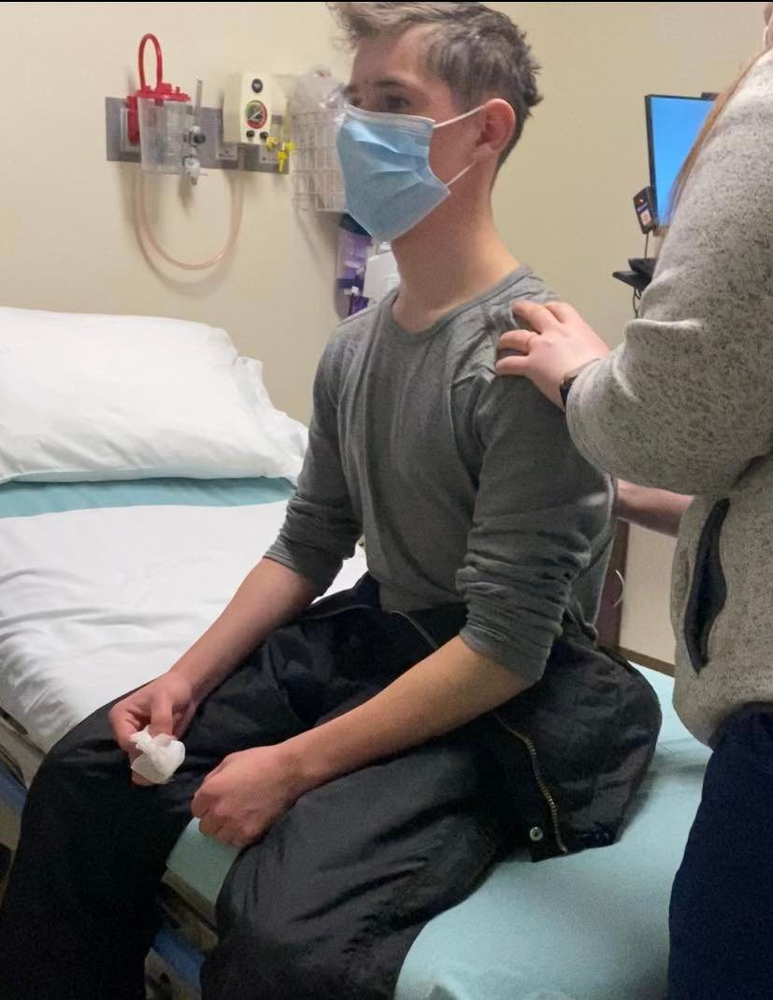
His mother and I burst into laughter — the kind that only comes with profound relief. We didn’t say it out loud, but we both knew what that simple sentence meant. If he had walked to the bathroom unassisted, he was okay.
Caleb was treated for minor hypothermia and released within the hour. I tucked him into bed around 5:30 AM.
The race website says he scratched at Allagash. That isn’t accurate. He completed nearly half of the second leg — close to 75 miles — before deciding that, this time, retreat was the better part of valor.
We love the Can-Am Crown. It is an exceptional organization, and we are amazed by the number of dedicated volunteers who make the race function at the professional level it does. There are a couple of things I think we can learn from this, though. Why was there no trail sweeper for more than five hours after the last team? Could safety checkers simply sweep their section after the last racer passes?
That said, we are indebted to the trail crews and grateful to the safety volunteers. We admire the professionalism of the Can-Am Crown. It is our hometown race.
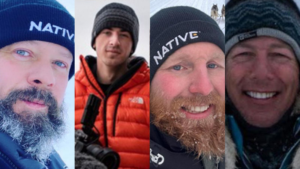
We also want to thank Native Dog Food for recommitting their support for next year, despite our scratch.
And lastly, to my wife Tammie — who loves my children as fiercely as if she had birthed them. They feel it. And they know it.
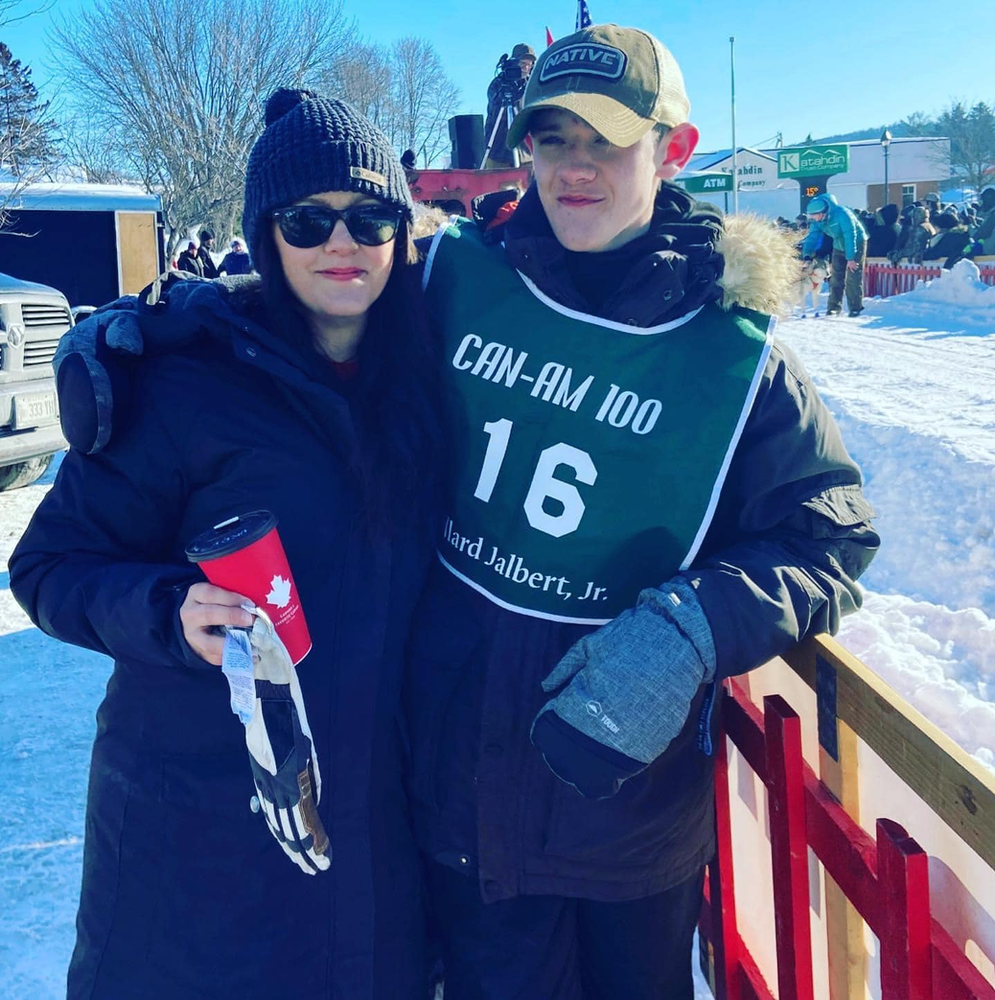
The name Caleb means tenacious. It suits him.
Within the first five minutes we were reunited, he looked me in the eyes and said, “I want bib number one next year. I’ll train harder. I’ll be smarter. We will complete it next year.”