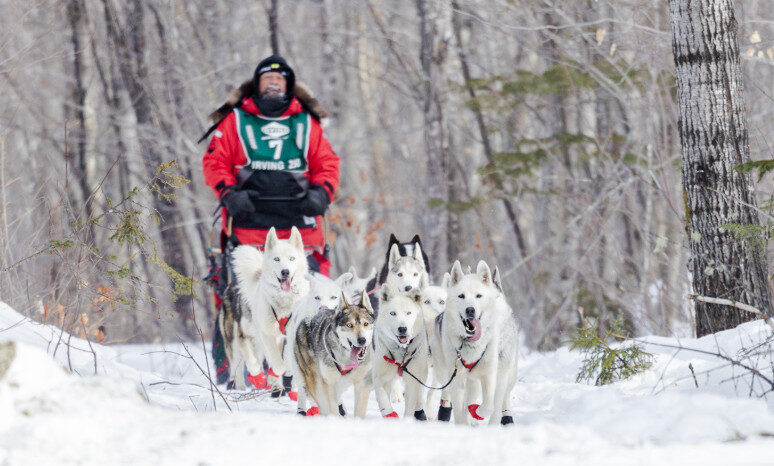
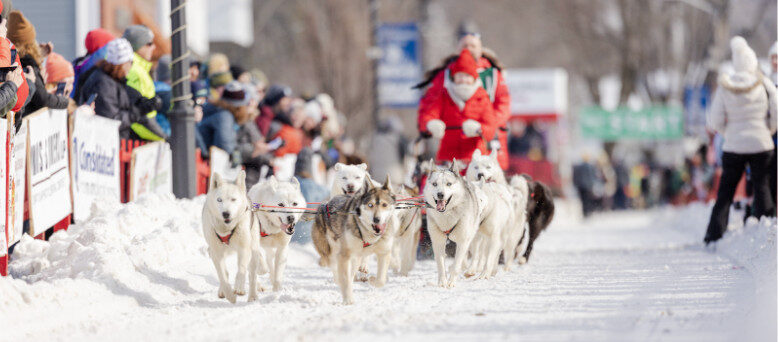
(Photo courtesy of Anastasia Paradis)
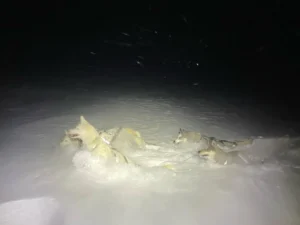
Laying there in the dark next to my leaders, their booties in my hands, ready to depart — it was a hard pill to swallow.
We were nearly four hours ahead of my laminated race schedule. The team had been running stronger as the temperatures dropped. I knew my dogs. I knew they would run faster to Allagash. There, I could drop as many as I needed to and then lope to the finish.
I knew I would finish.
But the vets were telling me their performance was masking dehydration. Eight of my twelve dogs had elevated heart rates after four hours of rest.
The words stuck in my throat like swallowing a pill without water.
“Okey… I’ll scratch.”
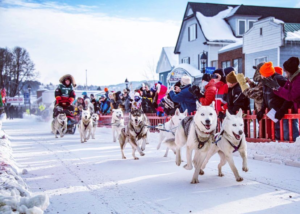
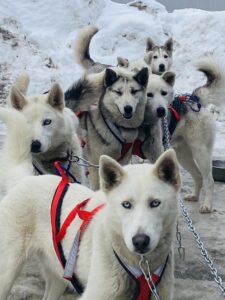
It was a great honor running the Can-Am Crown 250 this past weekend. I’ve run 750-mile expeditions, and I’ve trained for and completed 300-mile Iditarod Trail Sled Dog Race qualifiers in Alaska. But this was the first time running my purebred Seppalas under the rigors of a distance race, and it exposed a chink in my training regimen that cost me the finish.
But before that, let’s talk about what went right.
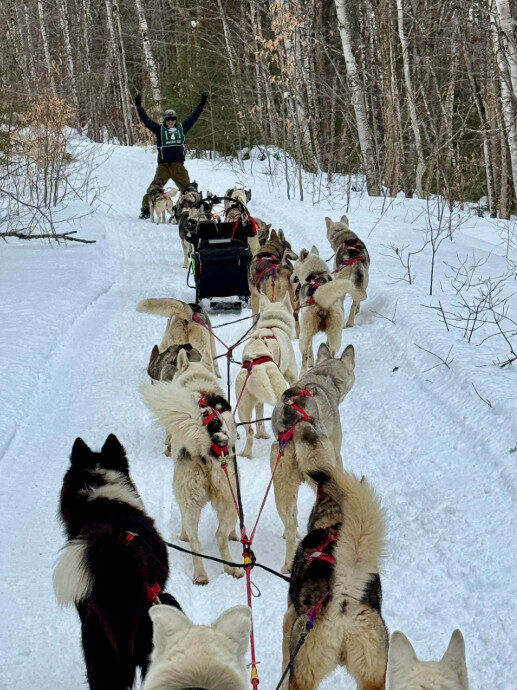
The run/rest regimen I developed with my mentor, three-time Iditarod champion Mitch Seavey, was working great. My goal was not to win this race but to finish with happy, healthy dogs. So I adopted the plan to never let my team get tired. We’d break the 50- to 65-mile runs into two segments and camp on the trail for a few hours. Without trackers on the mushers, it probably appeared I was moving at 5 mph, when in reality the team was maintaining an 8 mph moving speed.
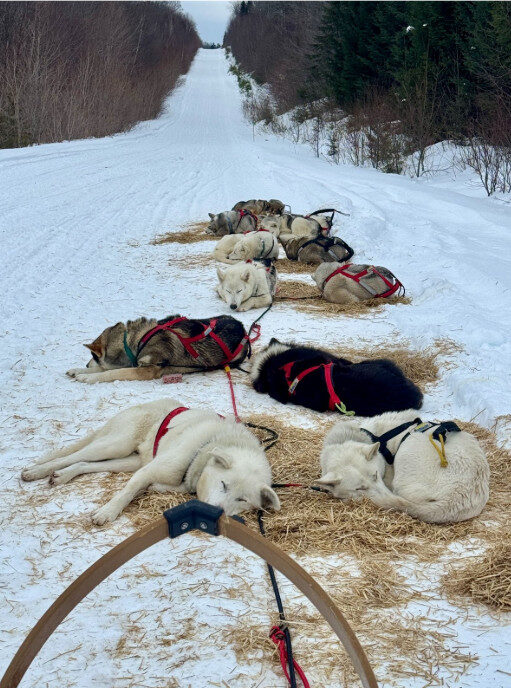
Evidence that this run/rest cycle was working was the fact that I was giving my dogs roughly a third more rest than my purebred competitors and still keeping pace with them. The idea was that it would pay off in the long game — and it was.
Every run, we shaved 30 to 45 minutes off the schedule I had laminated. By the time I reached the third checkpoint at Camp Syl-Ver, I was three hours ahead of schedule and preparing to leave 2.5 hours ahead of my friend and fellow purebred musher, Mark Roberts.
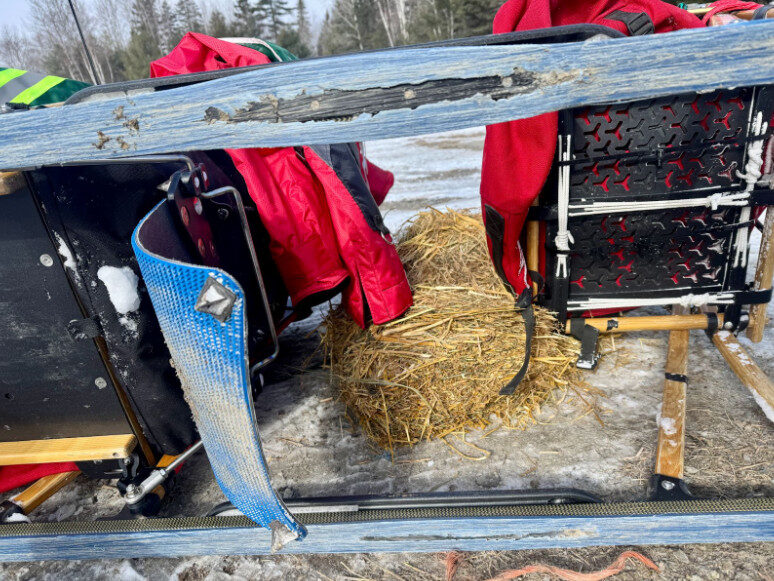
This was despite the fact that I had worn through my new runners on miles and miles of plowed gravel roads and was running on exposed metal before reaching the second checkpoint at Rocky Brook. In my decades of mushing, I had never completely worn through a set of runners in a season — much less in just one hundred miles. That should give one an idea of how much exposed gravel road we ran on. In a million years, I would not have imagined destroying a set of runners in one hundred miles. So I didn’t think to send extra runners to the checkpoint.
Lesson learned.
By the time I reached Camp Syl-Ver, the temperatures were dropping and the dogs were increasing their speed — without runners. I was so proud. Everything was ahead of schedule and going better than I had imagined.
So why the scratch?
I couldn’t summarize it better than to quote Vet Cindy at the third checkpoint. She is one of the chief veterinarians with 30 years of race volunteer experience:
“Running your first day in 42°F temperatures started you off with a hydration deficit. Your team is thicker-coated and heavier-boned than other teams in this race. And they are getting dehydrated. If you can’t get them to take in a lot of fluids here, you should consider scratching.”
Hydration.
This has always been a problem with my team. I can get them to eat all day long. But drink? No. Even soup — if given the chance, they will dump it, drain the water out, and then eat the meal.
The issue started at the second checkpoint. At Rocky Brook, the vets came by.
“Any concerns?”
“Not really. They are running great — the temps are dropping and their speeds are improving. But if you want to check a dog, check Druid, my leader. He is the oldest on the team. He’s eating frozen meat snacks but not the soup.”
My fear was confirmed.
“He is dehydrated. A couple others seem to be as well. Would you consider leaving them here?”
“The heat was hard on them, but they are locking in and improving. It’s only 35 miles to the next checkpoint, so I’d rather make this run and evaluate there.”
I cranked up the cooker and made a second meat soup before leaving the second checkpoint. The dogs didn’t drink it.
The run to the third checkpoint went even better than I had imagined. We were in the middle of a 60-degree temperature swing in our favor. We were already in the single digits, with -15°F by morning.
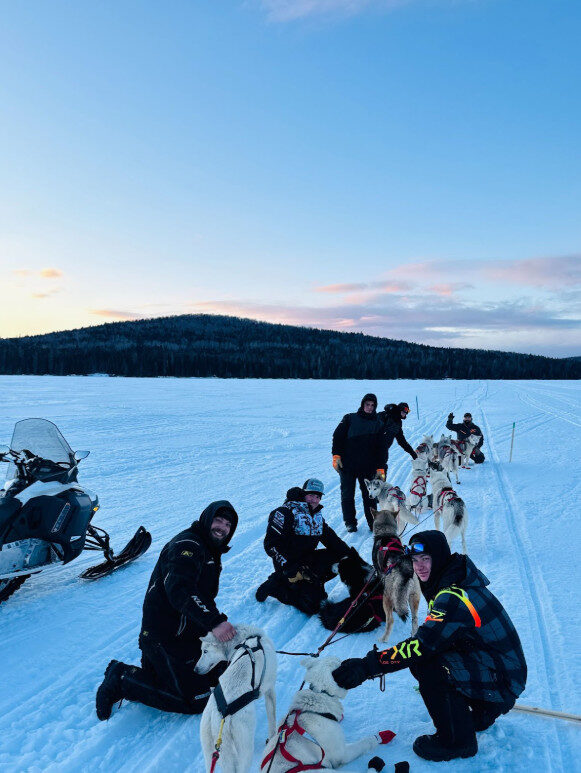
I took a minute to allow the Round Pond Safety Station to give the pups some love)
The last ten miles into Camp Syl-Ver, the team was euphoric, relishing the cold temps and the hardened trail. Whenever I let off the brake, they switched from a trot to a lope — broken runners and all. In those last few miles, no one could have convinced me we would be scratching at the next checkpoint.
The dogs were loving it — with one exception.
Jester is the largest dog on the team and does not know how to pace himself. He gives 100% all the time. The warm temperatures had been hardest on him. I could tell because he would stay in the trot and not transition into the lope when the team started to crank up.
That said, I was standing on the brake the last ten miles into the third checkpoint, and the team was still breaking into a lope at every opportunity.
At the third checkpoint, I started the cooker and refused to give the dogs their customary frozen chicken. I wanted them to hydrate. I needed them to drink this soup.
The vets came by.
“Any concerns?”
“Yeah. I am going to drop that big boy in wheel. He is probably dehydrated.”
“When would you like us to check him?”
“Right now would be good.”
They came back with the verdict: his heart rate was 120. He was dehydrated.
They checked the rest of the team. Their heart rates were still elevated as well. Again, they would eat anything I gave them, but they weren’t interested in hydrating.
The vets and I decided we would check them again before I departed and see who needed to be dropped.
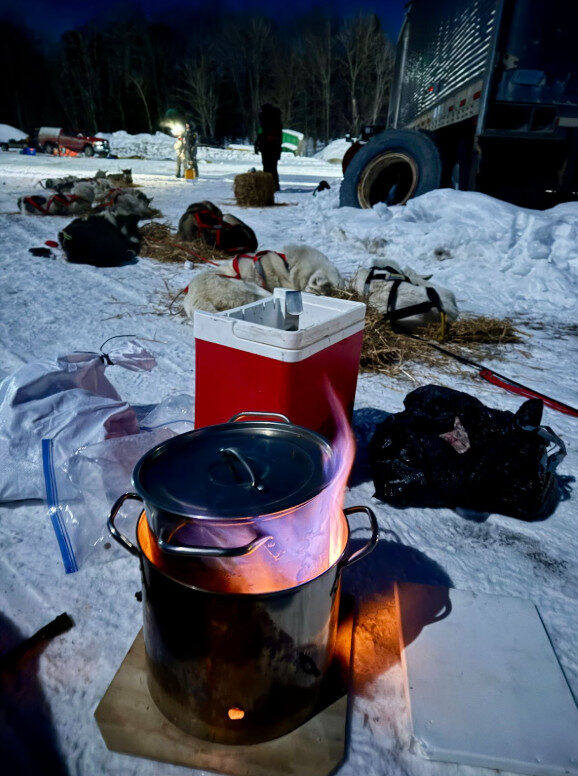
So at exactly four hours — according to plan, and now leaving nearly four hours ahead of schedule — my sled was packed, and I was bootying the last four dogs when Vet Cindy came over with the results.
“Eight of your twelve dogs are dehydrated. I know they are running well in the cold and you’re not seeing it in their performance. It is not a given that something will go wrong, but with elevated heart rates after four hours’ rest, I would advise you not to risk it.”
I had not slept at all in two and a half days so I was a bit raw. “These dogs deserve to finish this race. There are only about one hundred Seppalas left in the world, and I wanted to show that these dogs can do this. And you’re telling me I failed them.”
Her response was kind.
“I have malamutes. I know that with traditional Arctic dogs, it is hard to keep them hydrated in the temperatures we’ve had. I saw it a lot with more traditional dogs in the early years of the Can-Am. Training them to drink their meals is going to be the trick to get you down the trail next time.”
And she was right.
It was the chink in our training armor.
I know better than to feed them a meal after a training run and give them all night to eat it. I know you’re supposed to give the soup, then come back after a few minutes and take it away — train them that they eat it now, or they don’t eat. I know it.
But I hadn’t been doing it. So I failed. The dogs did not fail.
And that is an easier pill for me to swallow.
A couple hours later, my friend Mark Roberts walked over to prepare to leave.
“Your wish is going to come true! You said you hoped I’d beat you so that you’d get a Red Lantern. Well, I’m not beating you, but I think that Red Lantern will be yours.”
I could not be more proud of this team. They performed better than planned. Better than I hoped for. And I know my dogs. In the temperatures we were seeing, they would have given that to me for the remaining two legs of the race. In the end,I wasn’t willing to risk even one of them succumbing to dehydration to prove it to anyone else.
Our kennel is not accessible by road, and my handlers mushed the dogs the mile into our kennel when we got back from the race.
“They were as happy and as eager to run as always — like they hadn’t just run 150 miles in a day and a half!”
So they are well. I am well. All is well that ends well.
Maybe next year we work out the chink and give it another go.
This time it was Senior United States Senator, Susan Collins)
( Photo by Anastasia Paradis)