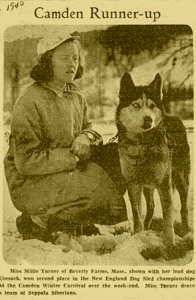
Intelligence vs. Trainability: Why Arctic Sled Dogs are Smarter (and Harder)
Traditional arctic sled dogs are generally smarter than other breeds, but that has its drawbacks. In dogs, as in humans, there is a big difference in intelligence and trainability.
Tracy, the hound owner, noted that while her hounds are incredibly obedient, they lack “problem-solving” skills. “Sometimes I miss having husky leaders,” she said. “You take them down a trail once and they remember it for life. If we take our usual trail backwards, my hounds have no idea where they are!”
Soon after, Joe asked if Seppalas were “smart like his Shepherd.” I told him no—they are likely much more intelligent than a Shepherd, but significantly harder to train. This is a difficult concept for many to process.
The Domestication Syndrome
Animal behaviorists have discovered a truth referred to as “Domestication Syndrome.” Consistently, domesticated animals are less intelligent than their wild counterparts. Tamability and subsequent trainability often make an animal less intelligent, not more.
Domestication is a symbiotic bargain. Dogs, horses, and cattle have become biologically successful by spreading across the globe, while their wild counterparts face extinction. In exchange for this success, domesticated animals traded away a portion of their intelligence.
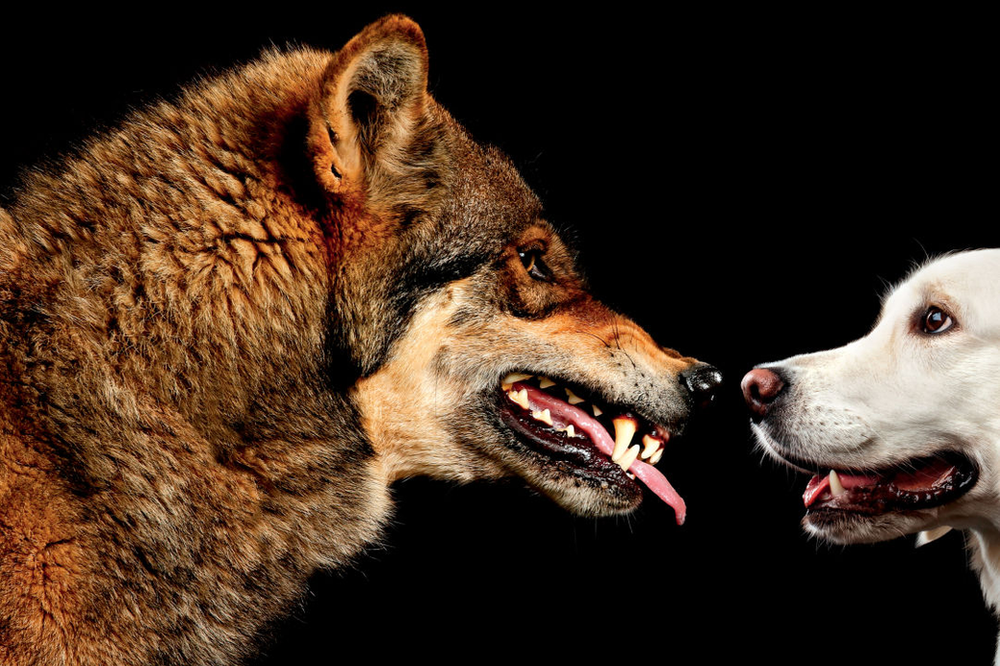
To tame animals, humans have selectively bred them to be lifelong adolescents. They are the animal equivalent of a 30-year-old man living in his mother’s basement playing video games. We favor behaviors like face-licking and tail-wagging—behaviors that cubs display to parents—while discouraging adult pack communication.
Intelligence Testing: Wild vs. Domestic
Behaviorists use several tests to measure this. In one test, a morsel is hidden in a sealed container. A domestic dog is likely to give up once they can no longer see the treat, while a wild canid will continue working, deducing the food is still there. In another test involving a treat folded in a tarp, a less intelligent dog will try to dig through the fabric, whereas a smarter canid will pull the corner to unravel it.
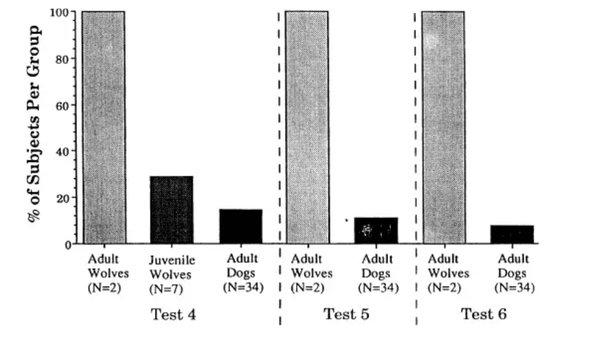
On a scale of 1 to 10, wolves are a ten. Most “toy” breeds fall in the 2-5 range, and most working dogs in the 4-6 range. Arctic spitz breeds consistently score higher than the majority of other working dogs.
Trainability ≠ Intelligence
I currently have a 120lb German Shepherd named Remi. We use a four-foot child gate for his room; we don’t even lock it, just lean it against the jam. Remi will stay there indefinitely until we come for him. Conversely, my 7-week-old Seppala puppies were scaling that same gate—locked in place—the moment we turned our backs. They knew exactly what we wanted; they just didn’t agree.

Another example: My old Rottweilers would wait for a command before eating, even if I left a steak on the counter and left the room. My Seppala matriarch, Frost, knew she wasn’t allowed on the bed. She would sleep there all day while I was at work, but she knew exactly when I’d be home and made sure she was nowhere near the bedroom when I walked through the door.
The Quarterbacks of the Trail
Arctic breeds are independent because of how they were raised—often in “wolf pack” social units—and how they are worked. A musher is a coach, and the lead dog is the quarterback. I want my leader to take my command into advisement, but I also want them to be smart enough to make a tough call.
If I say “Gee!” (right) in a blinding blizzard and my leader sees a cliff I can’t see, I want a dog smart enough to say, “Not today, boss,” and keep going straight.