When Down East Magazine made public my plans to take a Seppala team to Nome Alaska via the Iditarod, on the 100 year anniversary of Seppala’s team helping to save the children of Nome, I knew I was taking on a seemingly herculean goal.
I have to run three Iditarod qualifiers between now and then. If I fail to complete even one it will take my chances from “likely” to “not likely.”

But when my friend and Iditarod champion, Mitch Seavey, heard about my plans, he made me an offer. He is recovering from a couple procedures, so the Australian musher Christian Turner is running Mitch’s A team in the Iditarod this year, but he needed a second person to join musher Calvin Daugherty, in training up the A team for the Iditarod.
“If you come and work my dogs, you can run an A team in two Iditarod qualifiers while you are here.”
As I have elsewhere written, I took him up on the offer, withdrawing from the UP200 and signing up for two 300 mile qualifying races in Alaska, the Copper Basin 300 and the Willow 300.
But as the saying goes, “If you want to make God laugh, tell Him your plans.”
The day Caleb and I arrived in Alaska, jetlag and all, Mitch put us on a sled to measure our abilities. Caleb was put on “Puppy training detail”, mushing the future of Seavey kennels about 20 miles a day.
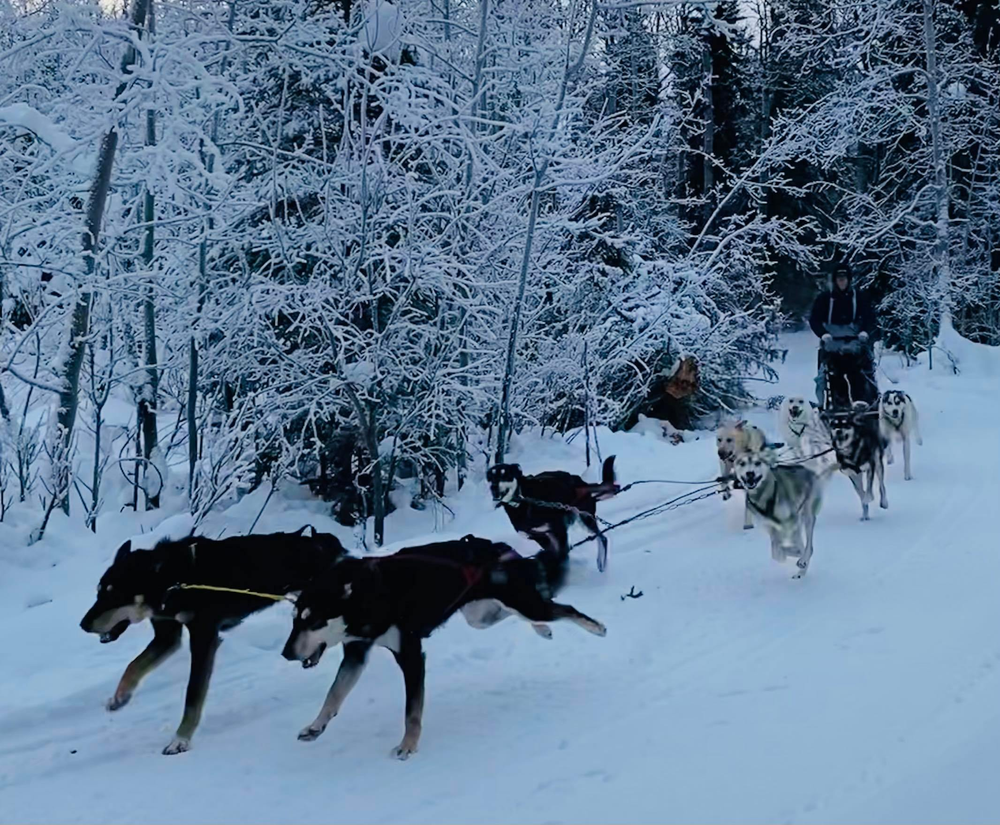
In the following 5 days we mushed nearly 350 miles. The 300 mile simulated race training series was not only designed to train the dogs, but also to train Calvin and I at proper camping and checkpoint care procedure.
After the simulated 300 mile race, it was time to rest the dogs and prep and pack for our first 300 mile race, the Copper Basin 300.
I had been studying the Copper Basin race maps for weeks. I had created a ditty to help memorise the names of the checkpoints and the distances between them, to the tune of “The Battle Hymn of the Republic”:
“Mushing 45 miles to Tolsona if you please
Then another 30 miles over to the Lake Louise
I’ll mush another 50 miles further but I know
I’ll only be at Sourdough
So I’ll mush another 40 miles to Lake Meirs
Further 69 miles to the Chistochina fires
A final 50 miles to the finish in Glenallen
300 miles in the Copper Basin”
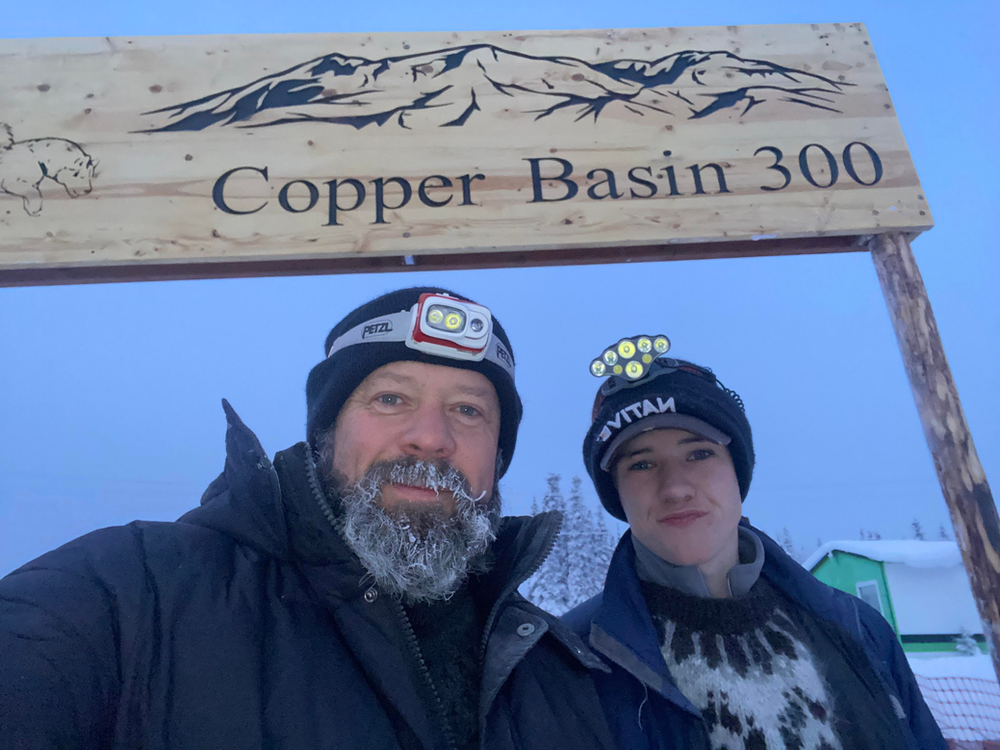
In short, I had been focusing every bit of myself on that race for weeks.
As is Mitch’s custom, he takes his teams for short runs in the days leading up to the race, to make sure everyone is happy and healthy and that no medical issues had been overlooked.
It was on one of these short pre-race runs that we took the wrong direction on a trail and descended a route that, for safety reasons, is forbidden at the Seavey Kennel. Calvin and I were unaware of the danger.
Ascending a steep hill, I saw Calvin’s team careening down to my right and realised I was in for a hairpin drop ahead. But by the time the sled and I reached the top, my team had already made the sharp turn and descent.
I put out my left foot to keep the sled from toppling. The snow swallowed my leg up to my knee. By now the team was descending full bore. I felt my knee come out of socket and bend out to the side, in a way no knee should ever bend.
“My knee!” I yelled.
But the inner voice, the musher, was yelling something else. Rule number one of mushing, “Don’t let go of the team.”
This is rule number one not for the sake of the musher, but for the wellbeing of the dogs. Without the musher, the team can become wrapped around a tree, tangled in ganglines, or worse, cross a busy road.
So the musher in me overcame my instinct for self-preservation. I stopped the team using my twisted knee as a snow anchor.
I pushed the sled up and tried to stand. When I did, my left knee again shot out and pain tore through my body. Then came the adrenaline and dizziness.
Calvin was straightening his team at the bottom and knew instantly I was hurt. “You ok? Drop your snow hooks and let’s take a look.”
But I knew the kennel was only 4 miles away. “Let’s just mush back,” I said.
Those were the most painful 4 miles of my career, but I managed to get the team home using one foot.
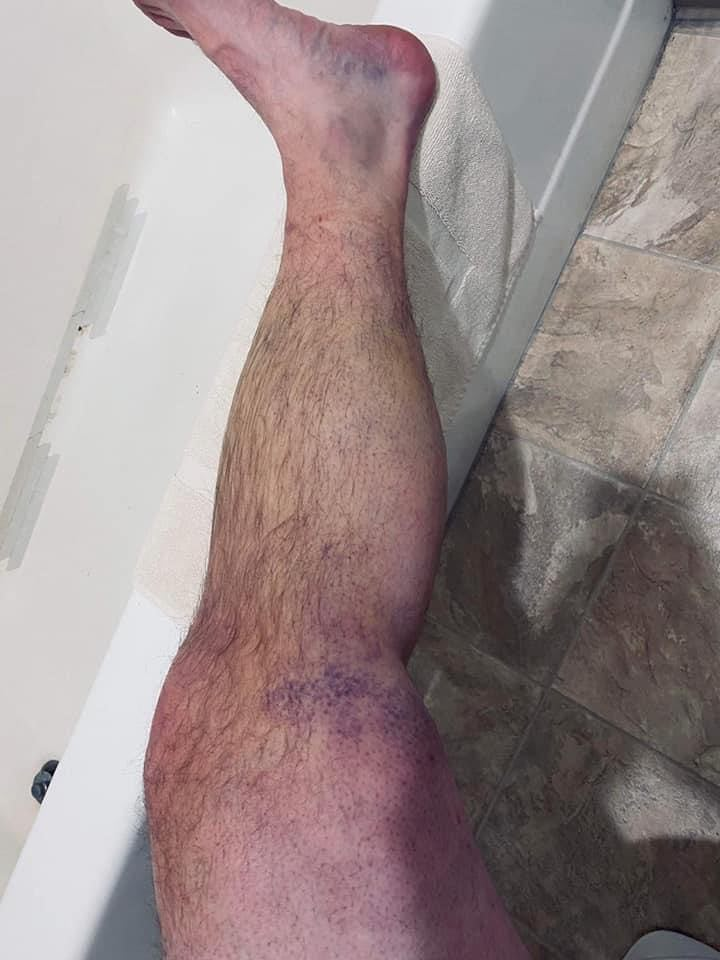
Back at the kennel I started unhooking dogs, but when I tried walking Berret, a powerful dog, my knee went again. Mitch told me to get inside.
Two torn ligaments and a torn tendon was the early guess. Later it turned out worse, two torn tendons, a torn meniscus and a ruptured ACL.
I’ll admit it took me two days to accept I couldn’t race the Copper Basin. Lara Kittleson took my place.

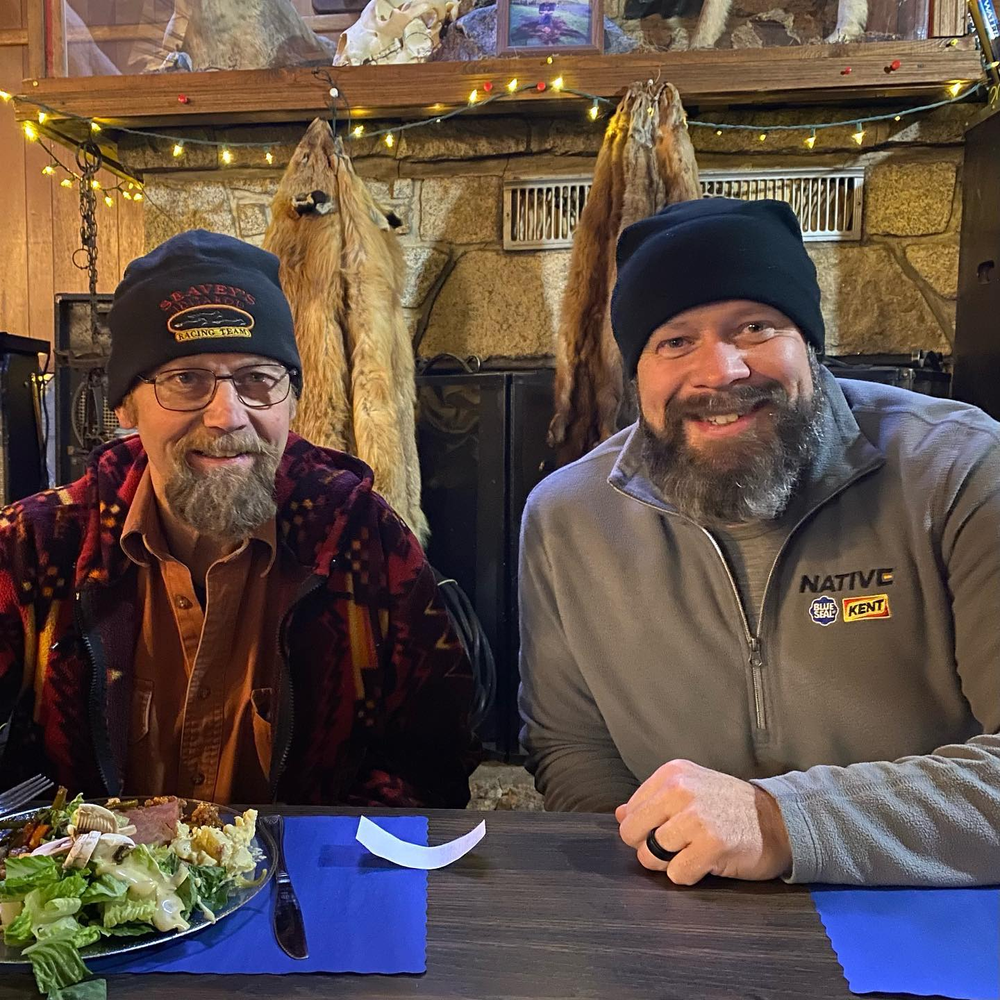
Mitch asked if I wanted to still go as a driver. At first I said no. I was gutted. But I’m glad I went. Sitting in checkpoints listening to Mitch and Dallas Seavey talk strategy taught me more than racing would have.
I also met mushers like Brent Sass, Nic Petit and race marshal Mark Nordman.
And I hadn’t given up on the Willow 300.
Coming back from Copper Basin, people kept asking if I’d be ready. My answer, “I’ll run it. Even if I have to duct tape broom handles to my leg.”