I’d like to tell you the story of how the Seppala Siberian Sleddogs made their way from Chukchi villages in Siberia one hundred years ago to our Poland Spring Kennels here in Maine. There are some in-depth works on the early years of the breed, and some pieces written on the latter history — usually with one bias or another. This will be a high-level overview. My hope is to write as simply and as evenhandedly as I can without getting too far into the weeds — a challenge, to be sure. Should I succeed, I am certain I will frustrate interested parties on both sides of the story. But in negotiations, they say that is how you know you are onto a good solution. So without further ado, let’s dive in by starting where few others start: with Norwegian explorer Roald Amundsen.

*Norwegian Explorer Roald Amundsen*
By 1906, the great polar explorer and one of my personal heroes, Roald Amundsen, had already earned international acclaim by being the first to successfully navigate the Northwest Passage along the arctic coast of Canada. His next goal was to be the first to reach the geographic North Pole and claim that glory for his native Norway as well. This ambition was thwarted, however, when in 1909 American explorer and Maine resident Robert Peary attained the North Pole.
Amundsen had already raised much of the funds for his North Pole expedition — funds he still wanted to use — so he shifted his efforts and continued publicly raising money for another arctic expedition with vague scientific goals.
His proposed expedition would begin in the Bering Sea off the coast of Alaska, with Nome serving as his point of entry and last supply stop. Plans were made there to outfit his men with Eskimo garments and to acquire sledges and dogs.
Nome resident and fellow Scandinavian Jafet Lindenberg purchased and imported an entire complement of small Siberian native Chukchi dogs as a gift to Amundsen’s planned expedition. Siberian dogs had recently become exceedingly popular among Alaskan dog drivers.

*Consolidated Gold Fields owner Jafet Lindenberg*
Early gold prospectors and trappers had long assumed the large dogs used by the Malamute Eskimo of Alaska were the best for mushing. When the supply of those dogs could not meet the gold rush demand, large dogs from all over the northwest coast of America were bought or stolen and shipped to Alaska’s ports to be sold as draft animals. “No dog over the size of a spaniel is safe from abduction,” it was said. Bigger is better was the early assumption.
But those assumptions had been proven wrong in recent All Alaska Sweepstakes races. The “little Siberian rats,” as many Alaskans called the new arrivals from across the Strait, proved quickly to run further, faster, and with less food than their Alaskan counterparts. Pound for pound, the Siberian imports were the superior choice. It was with great pride, therefore, that Lindenberg gifted them to Amundsen’s upcoming expedition.
Until Amundsen came to claim his team, they were placed in the care of one of the Consolidated Goldfields Mining Company’s dog drivers — another Norwegian immigrant named Leonhard Seppala. This is how the ancestors of my team came to America. They were destined for greatness, one way or another. But Providence had a different, albeit no less glorious, plan in store for these dogs than a trek to the top of the world.
Secretly, Roald Amundsen was planning an altogether different expedition than what he claimed publicly. The North Pole having been achieved, he knew there was no more lasting glory to be gained there. He could not afford to lose fundraising momentum by publicly changing his goal. His new vision would pit Norway against its ally in a race to the last unclaimed place on earth — Amundsen intended to beat the upcoming British expedition, led by Robert Falcon Scott, to the South Pole.
Once underway to Antarctica, Amundsen made his intentions known to the world. He beat the British to the South Pole by a few weeks, to the glory of Norway, and returned his entire crew safely. Scott and his British team did not make it back alive.
Back in Nome, when Lindenberg learned that Amundsen would not be coming to the Arctic in 1909, he gifted the imported team of Siberians to their keeper and trainer — Leonhard Seppala.
Seppala had already fallen in love with his new team. Perhaps he saw a bit of himself in the Chukchi dogs. In many ways he was their perfect human counterpart. He too was small and light on his feet. He too was an immigrant. He too had piercing ice-blue eyes. He too had an indomitable spirit.
Within a few years, Seppala and his little team of Siberians dominated the Alaska racing circuit. These were not afternoon sprint races — these were the ancestors of the modern Iditarod and Yukon Quest, races of hundreds of miles over and through some of the harshest terrain and weather imaginable.

*Leonhard Seppala*
Racing in Alaska declined for a time following the First World War, but Seppala continued to be considered the premier musher in the territory. In those years it must be remembered that the dog sled team was the only reliable form of transportation for most of Alaska during the long dark winter months. Seppala continued freighting supplies to the mining fields and transporting high-profile passengers through the frozen wilderness. For most of these years he relied on his most trusted leader — the now-famous dog Togo.
Togo had been a small, sickly pup, and Seppala had little hope for his future. But Togo had a courage, spirit, and intelligence that more than compensated for any physical shortcoming. He was truly more than the sum of his parts. Over the years Togo and Seppala developed a powerful bond, and in time Togo became as famous throughout the territory as Seppala himself.

*Seppala and Togo*
In the winter of 1925, Nome found itself in the grip of a diphtheria outbreak with an outdated and insufficient supply of antitoxin. Unlike the COVID pandemic of our age, which preys on the old and weak, diphtheria was the strangler of young and healthy children. A child could be perfectly well on Friday and dead by Sunday.
No serum could be brought by ship — the ocean was frozen for hundreds of miles. Airplane technology had not advanced enough to make arctic flight a viable option. The only way to get the serum to Nome was over hundreds of miles of frozen trail, by the ancient technology of the Inuit. It would have to go by dog team.
If you had asked anyone in Nome how Seppala’s Siberian dogs had ended up there before the outbreak, they would all have told you the story I have shared here — Amundsen’s aborted polar expedition. But destiny had brought Seppala from Norway and those Chukchi dogs from Siberia for such a time as this. The governor of Alaska called for a relay of mushers to carry the serum hundreds of miles to Nome, with roadhouses spaced a day’s travel apart serving as relay stations. But Nome residents trusted Leonhard Seppala above all others, and sent him south to intercept the relay.
Many heroic feats were accomplished by many great mushers and dog teams in this “race for life” — to add insult to injury, Alaska was in the grip of the most brutal storm and temperatures experienced in decades. The names of the heroes include such notable figures as the lead dogs Blackie and Balto, and the mushers Gunnar Kaasen and Wild Bill Shannon.
It is not my purpose to retell the full story of this great undertaking here. I would direct readers to such excellent volumes as *The Cruelest Miles* for an in-depth account. For my purposes, I will only note a few key points.
Most teams traveled an average of 30 to 50 miles. But the contribution of Leonhard Seppala and his team of Siberians, led by Togo, stands unrivaled. Togo led Seppala and the team through a deadly storm and across Norton Sound — a frozen bay of unstable sea ice — twice, in order to save time and save lives.
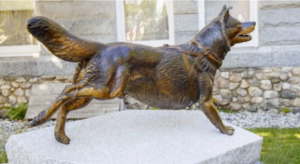
Initial reports wrongly attributed Togo and Seppala’s heroic exploits to Balto and Kaasen. A statue was erected to Balto in New York’s Central Park. But within a couple of years the true heroes were recognized, and Seppala was invited to bring Togo and the rest of the team to the lower 48 states to tour and speak.
At the culmination of the United States tour, Leonhard Seppala was awarded a medal in New York by Roald Amundsen himself — the same explorer for whom Seppala’s dogs had originally been procured.
Another musher was present that day. New Hampshire native Arthur Walden had gained notoriety as a former Yukon gold prospector, author, and lead dog man on the Byrd Expedition. He had created his own breed of sled dog he called Chinooks, named after the foundation sire of his breeding program.
Walden extended an invitation for Seppala to bring his Siberians to Poland Spring Resort in Maine, where a dog sled race was soon to be held. Despite his dogs having been transported across the country by rail and not conditioned for racing that season, Seppala accepted the friendly challenge.

*Arthur Walden and Chinook*
The race in Poland Spring, Maine was held the weekend of January 27, 1927. Many of the Northeast’s best mushers were present.
Seventeen years ago, I spent several days at the Maine State Library poring over microfilm to read the newspaper accounts of the race. I knew that Seppala had been challenged by Walden to race his Siberians against Walden’s Chinooks at the 1927 Poland Spring Sled Dog Derby, but I wanted more — I wanted the details. What follows is “the rest of the story” I discovered over those afternoons of research.
Poland Spring, Maine’s second Carnival Race was held Friday, January 27, 1927. It is remembered today as the epic event in which renowned dog drivers Leonhard Seppala and Arthur Walden competed head-to-head, with Seppala the winner despite a series of setbacks on the trail.
The race judges were Dr. Harry A. Souther, Vice President of the New England Sled Dog Club and official starter and timekeeper; Herbert J. Pearson, State Humane Agent; and Edward Payson Ricker Jr.
Prior to this historic race, it was widely assumed that the “Siberian-type dogs, frequently crossbred to wolves,” from Alaska would stand little chance against the larger mongrels of the East, bred largely from dogs brought from Labrador and beyond. When this theory was presented to Leonhard Seppala before the race, his only response was that he hoped for cold weather on account of his dogs’ heavy fur, and that he would have liked more time to prepare — his team had been doing little other than being exhibited across the country for the past several months.
The Thursday prior to the race, five teams were reported registered and ready. “Sippala,” as his name was misspelled in the article, “has two teams entered in the race.” By Friday morning, seven teams had readied themselves for the first day’s 25-mile leg.
The famed adventurer and New Hampshire resident Arthur Walden had entered the race accompanied by his celebrated lead dog Chinook, who was registered in the Mansion House with him — the other dogs, of course, stayed in the barns. Walden was the favorite, as last year’s winner with a well-established knack for winning New England Sled Dog Club races. Many of the region’s mushers ran dogs sired by his Chinook.
Walter Channing, a serious musher and the previous year’s second-place finisher, was also entered. E. P. Clark, the 1926 third-place finisher, did not enter — he and the Minot, Maine postmaster Alden Pulsifer were delivering gifts from the Governor of Maine to New York’s Governor Smith and Albany’s Mayor Thatcher by dog sled team.
The race was to begin at 9:30 AM, with teams leaving in ten-minute intervals.
The original course was planned as follows: from Poland they would mush to Dry Mills; from Dry Mills to West Poland; leaving West Poland, the teams would follow the shoreline of Lake Tripp to Poland Corner and back to Poland Spring. However, after the course was inspected, a last-minute change was made due to broken ice on the roads. The actual course ran as follows: mushers started at the Mansion House in Poland Spring, traveled through the Shaker Village and past Sabbath Day Lake to Dry Mills, turned right onto North Raymond, passed Churchill’s Store to West Poland, followed the shore of Lake Tripp, turned onto the state highway above Poland Corner, and finished in front of the Ricker Inn, 200 yards below the Mansion House.
As the race commenced, the temperature rose from the single digits to well above freezing. Strong gusts of wind helped keep the dogs from overheating. Before the race, while temperatures were still bitterly cold, one newspaper recorded this exchange:
“Not enough sting in it,” Seppala told a shivering reporter. “Want it good and cold.”
Walden’s team, however, was locally bred and fully acclimated. This was their weather. Leonhard Seppala would later comment to reporters that it was too warm for his heavy-coated Siberians.
Seppala left the starting chute at 10:20 and encountered two major delays during the race.
At the start, his team twice broke for the barn where they had been quartered, and he had to wrestle them back to the course — a delay that cost him at least two or three minutes according to reporters.
The second delay went unreported by Seppala after he crossed the finish line and remained unknown until Elizabeth Ricker finished at 2 PM. She told everyone present that Seppala had caught up to her on the trail, and that she had given her lead dog Sport the command to lead her four-dog Chinook team off the trail to give way for Seppala’s Siberians. Her team got tangled and began to fight. Seppala, seeing her distress, left his own team loose and unattended to go to her aid.
After the race on Friday, the headlines read: “Alaska Dog Driver, Hero of Race at Poland Spring.”
Seppala’s time would surely have been at least four to five minutes faster had he not encountered these two delays and displayed such good sportsmanship on the trail.
Elizabeth Ricker herself had yet another incident during the race. She was taking a break and eating a sandwich when her four large Chinooks caught sight of a skunk and bolted off the trail after the creature.
Seppala’s time from the 10:20 start to the finish line 25 miles later at 12:31 PM had experts calculating he had traveled at approximately 11 miles per hour.
Arthur Walden left the Mansion House starting line at exactly 10:30 AM and finished at 12:48 PM. Although Walden had Seppala in his sights twice during the race due to Seppala’s hold-ups, Seppala kept pulling further and further away. Walden never caught the Alaskan musher.
Walter Channing, with his lead dog Tom, came in 3rd, averaging 10 miles per hour — a pace “usually taken for granted would win any dog race under similar circumstances.”
George Constable also posted a strong time despite crossing the finish line with two dogs running loose rather than in harness.
Seppala’s old leader Togo did not run on the main team due to his age, but led the team of Alaskan Native musher Kingkeah — whose name reporters mangled repeatedly as Kingeah, Kingea, Kingkea, and Kingkeak. Kingkeah and Togo would finish the day in sixth place.
Despite the multiple setbacks, the warm temperatures, and the lack of conditioning, Seppala’s team of small Siberians won the day.
**Day One Results:**
– 1st Place — 2 hrs. 11 min. — Leonhard Seppala
– 2nd Place — 2 hrs. 18 min. — Arthur Walden
– 3rd Place — 2 hrs. 27 min. — Walter Channing
– 4th Place — 2 hrs. 28 min. — George Constable / Canadian (for owner Mosely Taylor)
– 5th Place — 3 hrs. 3 min. — Bragdon MacGregor (for Walter Channing’s puppy team)
– 6th Place — 3 hrs. 8 min. — Kingkeah (for Seppala)
– 7th Place — 4 hrs. — Mrs. Edward P. Ricker Jr.

*Seppala’s winning team at Poland Spring Inn and Resort, Maine*
To appreciate how fast these teams were racing, the previous 25-mile record — or “World Mark,” as reporters called it — was held by Canadian musher Emile St. Goddard, who had run 25 miles in 2:22:30. Two teams in this race beat that world record outright (Leonhard Seppala and Arthur Walden), and two others (Walter Channing and George Constable) came within six minutes of it.
After the first day, those who had favored the eastern dogs swung completely the other way. Mushers and would-be mushers lined up to speak with Seppala about acquiring dogs from him.
Even so, one reporter — not quite willing to concede the Siberians’ superiority — added this addendum to his account: *”However, due allowance had to be made for the skillful handling of Leonhard Seppala… His knack of giving a push with his foot from time to time in perfect rhythm on the level was a contributing factor… also aided by pushing the sled with his wiry strength on the upgrades. He would paddle with alternating feet — this was one of the little tricks he used. There were others.”*
Mrs. Caryl Peabody — the same Mrs. Peabody who had dropped out of the 1926 race with a leg injury — negotiated the purchase of a team of Seppala’s Siberian Huskies. One reporter noted: “Friday it was pretty well understood that Mrs. Peabody would have the team, part of which would be made up of dogs used in the race here, with two puppies to be shipped from Alaska.” She also negotiated the purchase of Seppala’s beautiful fur parka.
At the finish line on Friday, Seppala was asked, “How old are you?”
“Me?” he replied. “I’m 55. But I’m 20 in spirits!” And to prove it, he did three handsprings in succession. “And I’ve got a wife and three children!” he added, walking over to give Togo a pat on the head.
One reporter noted: Seppala would sell his other dogs — but not Togo.
Later that evening, Seppala brought Togo into the Mansion House parlor to tell “the kiddies and grown-ups, too, the story of the dog from his birth to the present.”
Friday night and Saturday morning it rained. When the rain froze, it turned the trail to glare ice.
The second leg was postponed Saturday morning over the weekend — no racing on Sunday — in hopes that conditions would improve by Monday. The big news for reporters that Saturday was Seppala’s announcement that the eleven-year-old Togo would be staying with Mrs. Edward P. Ricker Jr. — a complete reversal from his statement the day before, when he had told Mrs. Peabody he would not sell Togo for the world.
On Monday the 30th of January, the judges ruled that the remainder of the race would have to be canceled due to poor conditions. The Silver Cup was awarded to Leonhard Seppala and his lead dog Billiken in front of the Ricker Inn in Poland Spring.

*Elizabeth Ricker*
After the race, Elizabeth Ricker persuaded Seppala to partner with her in launching “Poland Spring Seppala Kennels” at the resort in Poland Spring, Maine. This is the birth of my kennel’s namesake.
For several years they bred, trained, and raced Seppalas throughout New England from this historic kennel. Almost 100 years later, my Poland Spring Seppala Kennel carries on this piece of Maine’s legacy with the direct descendants of those dogs.
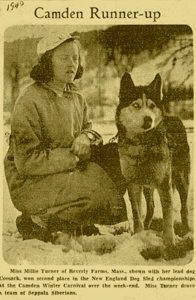
After the Poland Spring Kennel years, Seppala returned to Alaska and most of the kennel was dispersed — to Harry Wheeler in Quebec, William Shearer of Massachusetts, and a few others. McFaul carried the breed forward into the 1960s. It is important to note that each of these breeders maintained the Seppala as a breed apart from the mainstream Siberian Husky lines.
By the early 1970s, the Seppala Siberian was nearly extinct. There were no longer any kennels dedicated to its preservation. An American-born Canadian named Jeffrey Bragg was a Siberian Husky enthusiast who became enamored with the Seppala Siberian Sleddog and decided to dedicate his life to rescuing it.

*Jeffrey Bragg and Tonya of Seppala*
Jeffrey Bragg almost singlehandedly rescued the Seppala Siberian from the brink of extinction. Researching pedigrees and purchasing aging purebred dogs, Bragg began a breeding program at his Markovo Kennels that serves as the major touchstone for Seppala breeders today — so much so that by the time I came to Seppalas at the turn of the century, the phrase “Markovo Pure” was used among breeders to indicate that tracing a pedigree back to a Markovo dog was presumed to guarantee purity from that dog back.
A prolific writer, Jeffrey Bragg has generated a wealth of knowledge about the breed that continues to inform enthusiasts today. I was honored to spend a weekend with him on two separate occasions during the first decade of this century. The first was when he relocated his kennel from the Yukon to Manitoba. Aging and looking to the future, he wanted to move Seppala Kennels to the geographic center of the continent to better facilitate an expanding breeding program of prospective satellite kennels. I drove the 3,000-mile round trip to help set up fencing and bring home a bred female from his kennel. Just as important as these goals was the honor of meeting the man I believed to be a living Seppala legend.
The second trip came after Jeffrey Bragg’s marriage to Maine Chinook dog breeder Susan Bragg. I loaded a horse trailer full of personal belongings at her family farm here in Maine and made the 3,000-mile round trip again to deliver her belongings and bring home a few more Seppalas to my Poland Spring Kennel.
I found Jeffrey to be a mixture of brilliance and eccentricity — as is so often the case with those two characteristics paired together. He had a single-minded devotion and dedicated focus characteristic of men who accomplish great things and leave their mark on the world. “This one thing I do” would define his every waking moment, to the detriment of all else. The Seppala was Jeffrey. Jeffrey was Seppala. And nothing else mattered to him.
The 1980s and 1990s saw another true musher emerge to carry the torch forward. Doug Willet raced Siberian Huskies early in his mushing career but transitioned to Seppala Siberian Sleddogs. He not only bred scores of Seppala litters but proved once again that the breed was still capable of doing what it had become so famous for — winning races.

*Doug Willet*
Doug Willet’s great mid-distance racing success brought a surge of new interest in the breed. Over a quarter century, Willet created a network of satellite kennels — Riverview, Deer Creek, Sepp-Lok, Chukchi, TayMarr, and others. Eventually Willet and his satellites formed a breed club: the International Seppala Siberian Sleddog Club. Initially, Bragg and Willet attempted to work together in launching the club, but these two strong-minded leaders soon came into conflict.
As an aside, most of my first Seppalas were bred by Doug Willet at his Seppalta Kennels — Freud of Seppalta, Eve of Seppalta (daughter of the famous Race of Seppalta). Others came from his satellite kennel Tay Marr, owned by Bob and Tammy Davis: Tay Marr’s Jade and Tay Marr’s Pirate.

*Jonathan Hayes with Eve of Seppalta and Tay Marr’s Pirate (2004)*
Mostly, Willet and Bragg differed on how to address the genetic bottleneck of the breed. The Markovo rescue had produced a “second founder effect,” meaning the dogs were all more closely related than was desirable. Both men agreed this had to be addressed — they differed only on how.
At the risk of oversimplifying the opposing positions, here briefly is the dichotomy. Bragg rightly noted that Siberian imports had been used in the past to create breeding options and should be the method used again. Willet countered that since Siberian Husky genetics had been reintroduced to the former Soviet bloc by breed enthusiasts, and since there was no way to verify that Bragg’s import came from the same original source, it would be better and more practical to judiciously use Siberian Huskies from racing lines — many of which trace predominantly to early Seppala Kennels — as outcross options. Both men had strong points. And it is sad that our breed — already struggling numerically — was split by these two camps.
Over the past two decades, both men retired from running breeding kennels. Bragg declared his project closed in the early 2010s. When Willet retired, the International Seppala Siberian Sleddog Club carried on for a few years, but with two economic recessions and declining numbers of breeders and racers, the club went dormant.
It almost seemed as though the breed had been propelled forward by the sheer will of these two men, and with the loss of their leadership and vision, the movement waned.
In 2018, I reached out to the last board members of the ISSSC and asked them to consider relaunching the club in the hope of creating a home for the remaining kennels of both camps. The board members agreed to serve until a new election could be held. We did a membership drive and were surprised by the response. The ISSSC relaunched with twenty-two members, and a new board election was held.
The current board retained Tabetha Berge of Deer Creek Seppala Kennels in Wyoming and Zena Thomas as the club’s international board representative in the UK. New additions included RJ Williams of Evergreen Seppala Kennel in Michigan, and I was elected to the board from Poland Spring Seppala Kennels here in Maine. I then wrote Doug Willet on behalf of the board to offer him a lifetime honorary position on the board of the club he founded. He agreed and now serves as the tiebreaking vote should any tied decisions arise.
As we expected, the release of Disney’s film *Togo* in December of 2019 created a tremendous surge of public interest in the descendants of Togo and Seppala’s dogs. Sadly, it also created a surge of Siberian Husky breeders falsely claiming to sell Seppalas in a successful bid to cash in on their newfound popularity with unsuspecting buyers. There has therefore never been a greater need for a breed club to clearly define what is and what is not a Seppala. I am honored to serve on the board and help facilitate the continuance of our beloved breed.

If you’d like to learn more about Seppalas, the International Seppala Siberian Sleddog Club, or simply connect with people who love heritage breed sled dogs, visit the club website at [www.seppalas.com](http://www.seppalas.com), drop into our club Facebook page, or reach out to our family kennel. Poland Spring Seppalas is on Facebook at [Mush Maine — Poland Spring Seppala Kennels](https://www.facebook.com/HayesMushing). Or drop a comment below — we look forward to hearing from you.

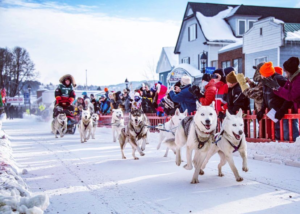
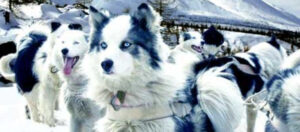
*Poland Spring Seppalas at the 2019 Can-Am Crown Sled Dog Race*